






Using the right skincare products with an LED face mask can help you build a simpler, more targeted routine. This guide explains whether to apply skincare before or after LED light therapy and which ingredients pair well with red, blue, near-infrared and deep-infrared wavelengths.
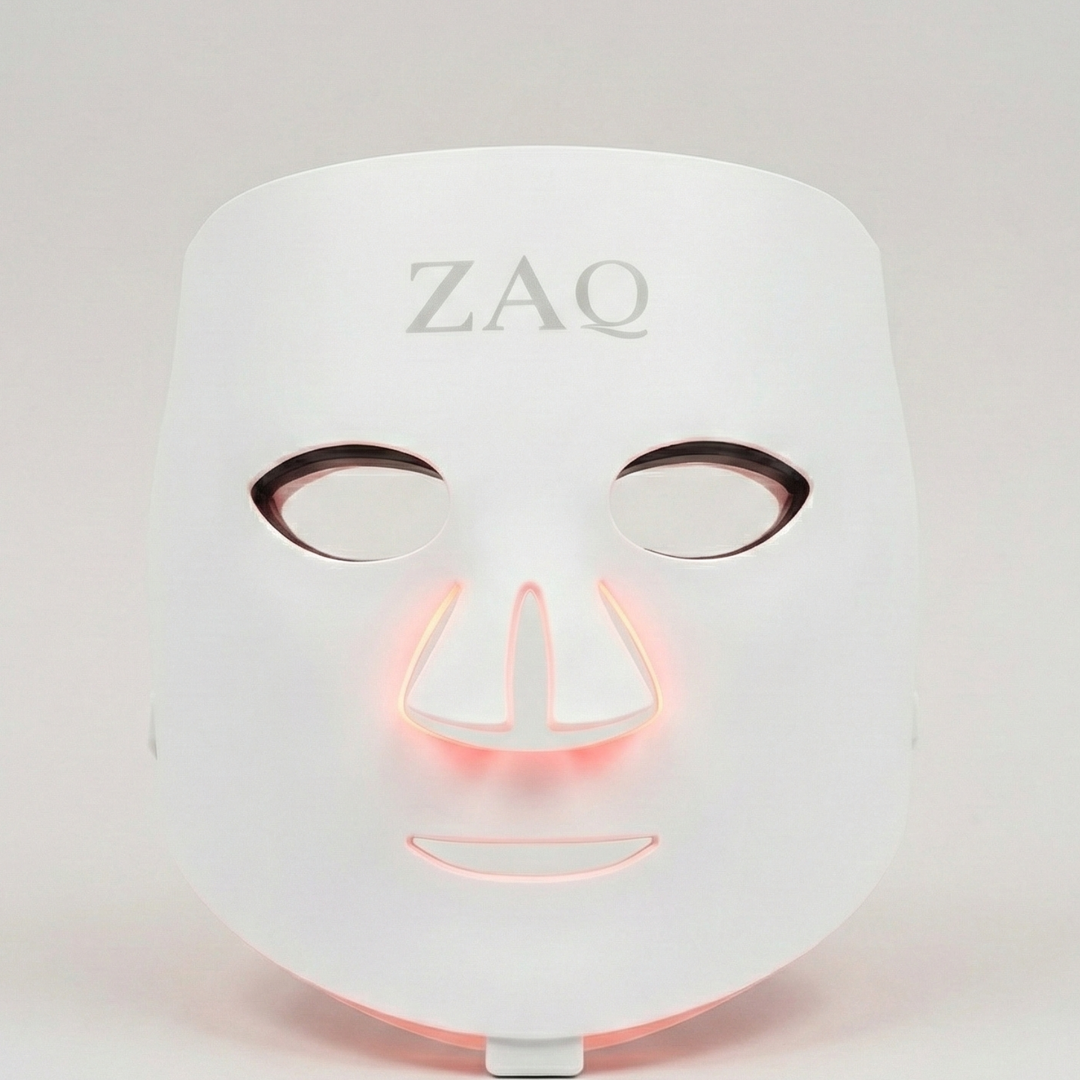
Should You Use an LED Mask Before or After Skincare?
A common question is whether an LED mask should be used before or after applying skincare. For a straightforward routine, begin with freshly cleansed, dry skin. Complete your LED session before applying leave-on products such as serums, creams or oils.
Starting with clean skin prevents makeup, sunscreen, excess oil and product residue from sitting between the device and your skin. Applying skincare afterward also lets you choose ingredients that address your specific goals, including hydration, barrier support, uneven-looking tone or blemish-prone skin.
Recommended order
- Cleanse: Remove makeup, sunscreen, oil and residue.
- Dry your skin: Gently pat your face completely dry.
- Use your LED mask: Select the appropriate mode and complete the recommended session.
- Apply serum: Choose a serum suited to your skin goals.
- Moisturize: Finish with a suitable moisturizer.
- Use SPF in the morning: Apply broad-spectrum sunscreen as the final daytime step.
Why Pair Skincare with LED Light Therapy?
LED light therapy and topical skincare serve different roles. The LED device delivers selected light wavelengths, while serums and moisturizers provide ingredients directly to the surface of the skin. Pairing them creates a more complete routine instead of relying on one step alone.
A well-planned routine can help you:
- Maintain consistent hydration
- Support the skin’s moisture barrier
- Address dullness or uneven-looking texture
- Care for oily or blemish-prone skin
- Support smoother, healthier-looking skin
- Make LED treatments easier to maintain consistently
LED Wavelength and Skincare Pairing Guide
| LED wavelength | Common skincare goal | Suggested product types |
|---|---|---|
| Red light — 630nm | Fine lines, dullness and smoother-looking skin | Peptides, hyaluronic acid, vitamin C and moisturizer |
| Blue light — 460nm | Blemish-prone, oily or congested-looking skin | Niacinamide, lightweight hydration and oil-free moisturizer |
| Near infrared — 850nm | Deeper skin-wellness and barrier-support routines | Ceramides, peptides and soothing moisturizer |
| Deep infrared — 1072nm | Advanced light-therapy and nighttime wellness routines | Peptides, ceramides, squalane and rich moisturizer |
What Skincare Pairs Best with Red Light Therapy?
The ZAQ Noor 2.0 Pro uses red light at 630nm. Red light is commonly selected for routines focused on fine lines, firmness, dullness and smoother-looking skin.
Best products to apply after red light
- Peptide serum: A practical option for routines focused on firmness and healthy-looking skin.
- Hyaluronic acid serum: Helps attract and maintain moisture for a plumper, more hydrated appearance.
- Vitamin C serum: Often used during the morning to support brightness and antioxidant care.
- Ceramide moisturizer: Helps reinforce hydration and support the skin barrier.
Suggested routine: Cleanse, use red light for 10 minutes, apply peptide or hyaluronic acid serum, moisturize and finish with SPF during the day.
What Skincare Pairs Best with Blue Light Therapy?
Blue light at 460nm is commonly selected for blemish-prone or oily-looking skin. The supporting skincare routine should remain gentle and should not overload the skin with several strong active products at once.
Best products to apply after blue light
- Niacinamide serum: Commonly used to support balanced-looking skin and improve the appearance of visible pores.
- Lightweight hydrating serum: Helps maintain moisture without leaving a heavy finish.
- Oil-free moisturizer: Supports hydration for oily or congestion-prone skin.
- Soothing moisturizer: Useful when the skin feels dry, uncomfortable or sensitized.
What Skincare Pairs Best with Near-Infrared Light?
Near-infrared light at 850nm is invisible to the human eye and is designed to reach deeper than visible red or blue light. It works well within routines centered on overall skin wellness, recovery and barrier support.
Best products to apply after near infrared
- Ceramide serum or cream
- Peptide serum
- Fragrance-free hydrating moisturizer
- Soothing serum with gentle humectants
This combination may be particularly appealing to people who prefer a minimalist evening routine focused on comfort, moisture and barrier support.
What Skincare Pairs Best with 1072nm Deep Infrared?
Deep infrared at 1072nm is an advanced wavelength included in the ZAQ Noor 2.0 Pro. It is designed to provide deeper light penetration as part of an at-home skincare and wellness routine.
Best products to apply afterward
- Peptide serum
- Ceramide moisturizer
- Squalane facial oil
- Rich nighttime moisturizer
Because richer formulas can feel heavy during the daytime, deep-infrared sessions pair naturally with an evening routine followed by a nourishing cream.
Morning LED Light Therapy Skincare Routine
- Use a gentle cleanser. Remove oil and any product left from the previous night.
- Pat the skin dry. Do not leave water sitting beneath the mask.
- Complete a 10-minute LED session. Choose the mode that best matches your current skincare goal.
- Apply a morning serum. Consider vitamin C, niacinamide, peptides or hyaluronic acid.
- Apply moisturizer. Choose a texture appropriate for your skin type.
- Finish with sunscreen. Apply broad-spectrum SPF 30 or higher.
Nighttime LED Light Therapy Skincare Routine
- Remove makeup and sunscreen. Double-cleanse when needed.
- Dry your skin completely.
- Use your selected LED mode for 10 minutes.
- Apply a targeted serum. Peptides, niacinamide, ceramides or hyaluronic acid are common options.
- Apply moisturizer. Use a richer formula if your skin needs additional overnight hydration.
- Add facial oil if desired. Apply it as the final step to help seal in moisture.
Skincare Ingredients to Use Carefully with an LED Mask
Not every skin type responds to active ingredients in the same way. Products that exfoliate or accelerate surface renewal may cause dryness or irritation, particularly when several are combined.
Use additional care with:
- High-strength retinoids
- Strong glycolic, lactic or salicylic acid treatments
- Benzoyl peroxide
- At-home chemical peels
- Products that already cause redness, peeling or sensitivity
These ingredients are not automatically incompatible with LED therapy. However, consider alternating routines rather than layering several strong actives at the same time. Follow the product label and consult a qualified skincare or medical professional when appropriate.
Common LED Mask Skincare Mistakes
Applying too many products before the session
Unless your device instructions specifically recommend a compatible topical product, begin with clean, dry skin.
Using more treatment time than recommended
A longer session is not automatically better. Follow the time and frequency listed in the device instructions.
Changing the routine every few days
Skincare routines are easier to evaluate when they remain consistent. Avoid introducing several new devices and products simultaneously.
Skipping moisturizer
Even oily skin needs appropriate hydration. Choose a lighter texture rather than eliminating moisturizer completely.
Skipping sunscreen
Sunscreen remains an important final step in a daytime skincare routine, regardless of which LED wavelength you use.
Why Use the ZAQ Noor 2.0 Pro?
The ZAQ Noor 2.0 Pro combines four selected wavelengths in one flexible LED face mask:
- Red light: 630nm
- Blue light: 460nm
- Near infrared: 850nm
- Deep infrared: 1072nm
Its customizable modes and 10-minute session time make it easy to build LED therapy into a morning or nighttime skincare routine.
Learn more about the ZAQ Noor 2.0 Pro LED Face Mask or explore our LED light therapy collection .
Frequently Asked Questions About LED Masks and Skincare
Do I use an LED mask before or after serum?
Use the LED mask on clean, dry skin, then apply serum afterward unless the mask instructions specifically direct you to use an approved topical product.
What is the best serum to use after red light therapy?
Peptide, hyaluronic acid and ceramide serums are popular choices. Vitamin C may also be included in a morning routine when it is suitable for your skin.
Can I use hyaluronic acid after an LED mask?
Yes. Hyaluronic acid is a commonly used hydrating ingredient that can be applied after completing an LED session.
Can I use retinol after LED light therapy?
This depends on your skin tolerance, the retinol formula and the directions for both products. Consider alternating routines if retinol causes dryness, peeling or irritation.
Can I use moisturizer before an LED mask?
For a simple routine, apply moisturizer after the session. Starting with clean, dry skin avoids placing a heavy product layer between the LEDs and your skin.
Can I use an LED face mask every day?
Use the frequency recommended in your device manual. Do not assume that more frequent or longer sessions will provide better results.
Should I wash my face after LED light therapy?
You generally do not need to cleanse again immediately afterward. Complete the session on clean skin and continue with serum and moisturizer.
How long does an LED skincare routine take?
The ZAQ Noor 2.0 Pro session lasts 10 minutes. Cleansing and applying your post-treatment skincare typically adds only a few additional minutes.
Build Your LED Skincare Routine
Combine four wavelengths with a skincare routine selected for your individual goals—all from the comfort of home.
Shop the ZAQ Noor 2.0 Pro


